Labour, is the process of your body getting ready to give birth. Contractions during labour work to thin (efface) and open (dilate) the cervix, so the baby can enter the birth canal.
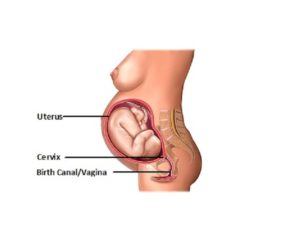
Labour is divided into three phases:
- early labour
- active labour
- transition
Your contractions may be very irregular and short at the beginning. This is ‘early’ labour. Most people can spend their early labour at home, going about regular activities and resting when they can. If it is night and you can sleep through contractions, it is a good idea to rest, since you don’t know how long your labour will be.
As the contractions get stronger, longer and closer together you progress into ‘active’ labour. In this phase you will usually have to stop what you are doing during a contraction, and really focus on breathing and releasing any extra tension. Your body will be working hard, and you will become more focused during each contraction. Often, the comfort measures that helped earlier are not as helpful now and you may need to try other positions or techniques to help release tension in the body as the strength of the contractions increases.
At the end of the first stage, the uterus is working even harder to finish dilating the cervix to 10 cm. At this time, contractions can last 90 seconds or more, are even stronger than before, and can occur every two minutes or so. This is called the “Transition” phase, and while it is often the most difficult time in the first stage, it’s also the shortest. You may feel tired and may also feel nauseous, shaky, sweaty and have a lot of low back pain as the baby starts to move down. The amniotic sac may break at this time, if it has not already done so.