- Bright red vaginal bleeding with or without pain
- Signs of preterm labour (labour before 37 weeks of pregnancy)
- Signs of high blood pressure in pregnancy (sometimes called pre-eclampsia or toxemia), which include
- sudden or severe swelling of your face, hands and feet
- sudden weight gain of 1 kg (2.2 lb) over a period of a week or less
- dizziness, headaches that won’t go away, changes in your vision (such as blurring or seeing spots)
- sudden and severe vomiting
- very bad pain under your rib cage
- Any change or absence of fetal movement (your baby should make at least 6 movements in a 2 hour period). Once you begin to feel your baby’s movements regularly (at about 28 weeks) you should feel movement throughout the day, every day. A decrease in movement may be the first warning that your baby is not well or having trouble.
Contact your healthcare provider if you have:
- Less than 6 movements in two hours.
- Abdominal pain.
- A gush or trickle of fluid from your vagina. This could indicate that your membranes (bag of waters) have broken. The amniotic fluid is enclosed in a sac that surrounds and protects your baby. Once this sac has broken, your baby faces an increased risk for infection.
- Foul-smelling vaginal discharge. (Vaginal discharge causing itchiness and irritation should be reported within 24 hours.)
- Frequent passing of urine with a burning sensation should be reported within 24 hours.
- Any illness causing fever (over 38° C or 100.4° F).
- An injury or accident, such as a fall or a motor vehicle accident.
- Persistent negative feelings, lasting low mood and/or overwhelming feelings of anxiety.
- Suicidal thoughts.
Preterm labour
Labour that starts too early (more than 3 weeks before your due date) may lead to preterm birth. Always go straight to the hospital if you are experiencing any signs of preterm labour.
Why be concerned?
Preterm babies are at greater risk the earlier they are born. Preterm babies are more likely to:
- Have trouble breathing, feeding and keeping warm
- Suffer long-term problems (seeing, learning, walking, breathing)
- Be too small and weak to live
- Suffer from infections
- Have longer hospital stays
Signs of preterm labour should never be ignored. Half of all preterm births occur with no known risk factors. Early response to preterm labour reduces the chance of preterm birth.
Who is at risk?
Preterm labour can happen in any pregnancy. Half of all preterm births occur with no known risk factors. Some things that increase the risk include:
- Tobacco smoke
- Previous preterm birth
- Injury (including family violence)
- Alcohol and drug use
- Multiple pregnancy (twins or more)
- Periodontal disease (gum and bone disease)
- Age less than 17 or greater than 35 years
- Pregnancy complicated by other conditions like high blood pressure, diabetes, bleeding
- Not eating often enough (at least every 3 hours) during the day
What are the signs of preterm labour?
Some people instinctively know that something is not right, but specific signs include:
- Contractions (may be painful or painless)
- Bleeding or spotting (lighter bleeding) from the vagina
- Cramps (may feel like menstrual cramps or gas pains)
- Changes in low back pain
- Fluid gush or leak of fluid from the vagina
- Full or heavy feeling in the vagina
- Pressure in pelvis or lower abdomen
- Change or increase in vaginal discharge
It is important to know the signs of preterm labour – often labour can be stopped or delayed. Trust your instincts. If you are concerned that something is wrong, do not hesitate to call your caregiver or go to the hospital. It can make a big difference to your baby’s health.
| How to reduce the risk | Help available to reduce the risk |
| Stop smoking and avoid secondhand smoke | Discuss the effect of smoking and tobacco on your baby with your caregiver Involve members of your household to help you to stop smoking Reduce your exposure to second-hand tobacco smoke Discuss ways to stop smoking with your caregiver Seek a support group for help |
| Avoid alcohol and drugs | Consult Alberta Health Services Addiction Services at 1-866-332-2322
|
| Avoid all injuries | Wear a seatbelt when in a vehicle Seek help for family violence Report injuries to your caregiver |
| Seek prenatal care early in pregnancy including dental care |
Consult a doctor or midwife Visit your dental professional for a check-up and cleaning Consult a caregiver Attend childbirth education classes |
| Choose a healthy lifestyle | Avoid fatigue Eat a healthy diet Exercise regularly Avoid long trips Practice safe sex |
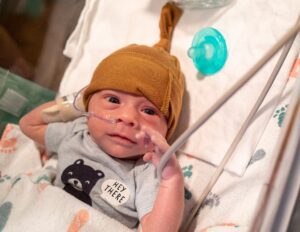
About 6 out of every 100 babies are born before 37 weeks. In general, the earlier a baby is born, the greater the chance that they may have problems. Premature babies are more likely to have breathing and feeding problems and are more prone to infections. However, with the medical treatments available today most premature babies survive and most do very well.
If your baby is born before 37 weeks, they will likely require care in a neonatal intensive care nursery (N.I.C.U.). If further medical treatments are required, your baby may need to be moved to an intensive care nursery, in another hospital.
Your baby may need to be in a special incubator to be kept warm and might need tubes and monitors. The doctors and nurses will provide you with information and support. It is important for you to ask questions and share your concerns with the staff.
All babies, including premature babies, need to be touched and spoken to. You will be encouraged to be involved in your baby’s care as much as possible. Breast/chestfeeding is encouraged as human milk is the perfect food for all newborns, especially premature babies. The staff will help you to breast/chestfeed and teach you how to express your breast milk.
Parent groups can be a good source of support. Ask the NICU staff for further information.